The Shining Path (1980-2000) and the Long Shadow of Violence in Peru
Tuesday, March 3, 2026 5-6 p.m.
We are honored to welcome Charles F. Walker, distinguished professor of history, University of California, Davis, as the Spring 2026 Neilson Professor. He will deliver the second in his lecture series, "The Shining Path (1980-2000) and the Long Shadow of Violence in Peru: Reconsiderations on Militancy, Resistance, and Terrorism," on Tuesday, March 3.
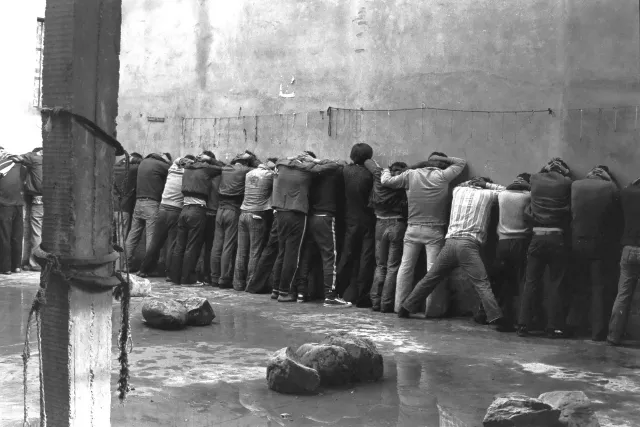
Lecture Description
Peru's Internal Armed Conflict raged from 1980 to 2000, prompting the death of at least 70,000 people. Most studies of the Peruvian Maoists correctly stress their differences with other insurgencies across the Americas and even the globe. The Peruvian Truth and Reconciliation Commission underlined the fact that rural, Indigenous people constituted the majority of the victims. In this presentation, the spring 2026 Neilson Professor Charles Walker seeks to answer key questions about the insurgency and its impact in contemporary Peru:
- Why did young people join the movement, particularly women, and what was the allure and ultimately the cost?
- How did this conflict affect others seeking social change in less violent fashion?
- How does the Peruvian case help us consider the concepts of resistance and terrorism?
Provost reception immediately following in the Skyline Reading Room.
Charles Walker
Charles Walker, distinguished professor of history, University of California, Davis, is a leading scholar of Latin America, the Andes, and Peru, whose work in the fields of colonialism, environmental history, and human rights has placed him at the forefront of the historical discipline over the last two decades. He directed the Hemispheric Institute on the Americas at UC Davis for over a decade and was also the director of Global Centers for Latin America & the Caribbean (Global Affairs). He held the MacArthur Foundation Endowed Chair in International Human Rights from 2015-2020. He has published widely on Peruvian history, truth commissions, and historiography, in English and Spanish. His 2014 Harvard University Press book, The Tupac Amaru Rebellion, was named one of the best books of the year by the Financial Times and also won the Hundley Prize from the Pacific Coast Branch of the American Historical Association. His Witness to the Age of Revolution has won awards in the United States and Peru and has been translated into Spanish and Quechua.
Neilson Professorship
The Neilson Professorship was established in honor of the college’s third president to enable the college to have eminent scholars or artists whose work has broad intellectual appeal visit the community and share their current research with faculty and students.